

What it is
Ops tooling keeps piling up: one tool for monitoring, another for alerts, another for terminals, yet another for playbooks; commercial products charge per host and per module while your data sits in someone else's cloud. openaiops brings these everyday paths together into one platform you fully control, for ops and SRE teams in on-premises, hybrid cloud and domestic-stack environments who need to see, control, change and explain what happens.
Screenshots
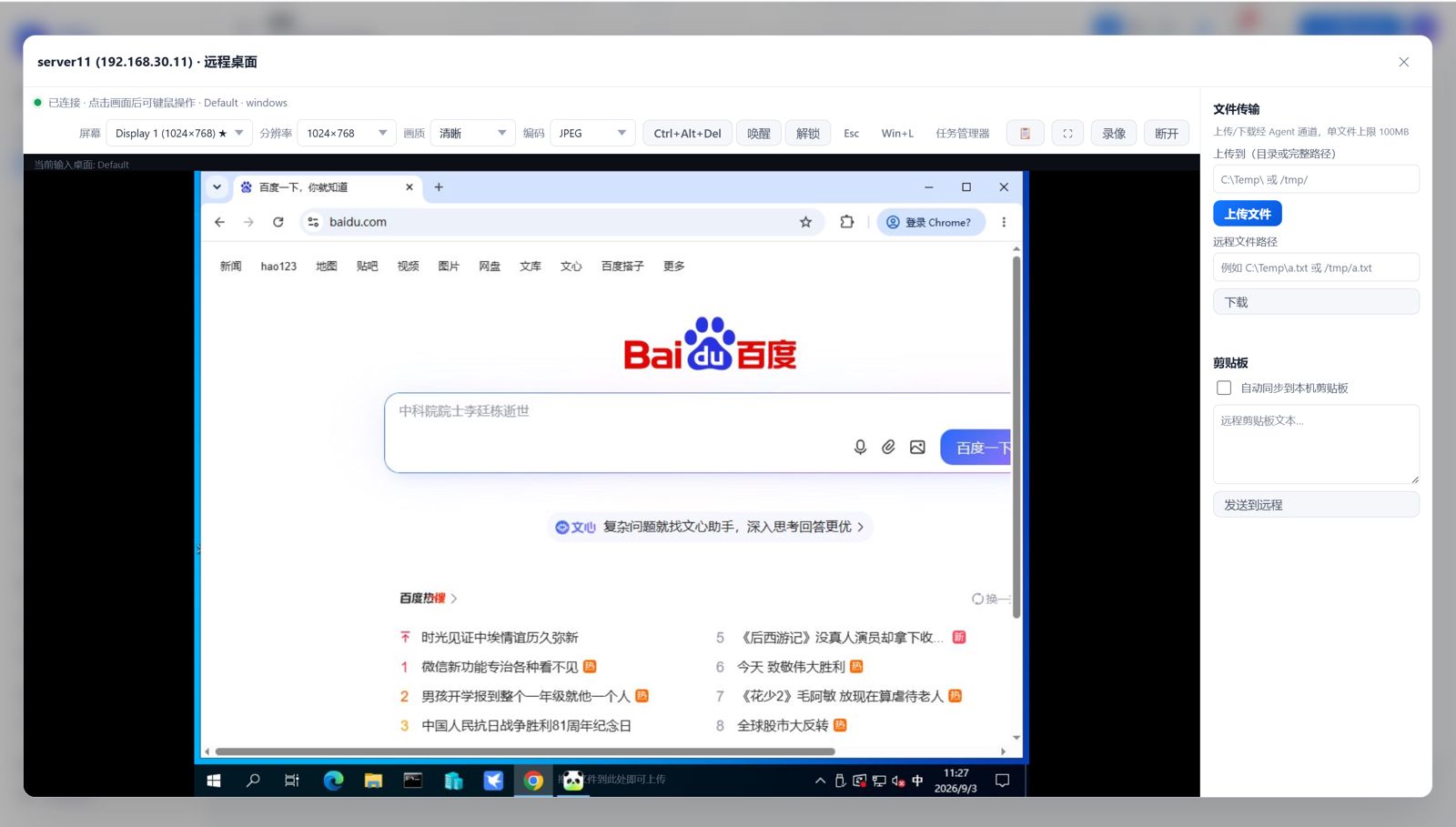
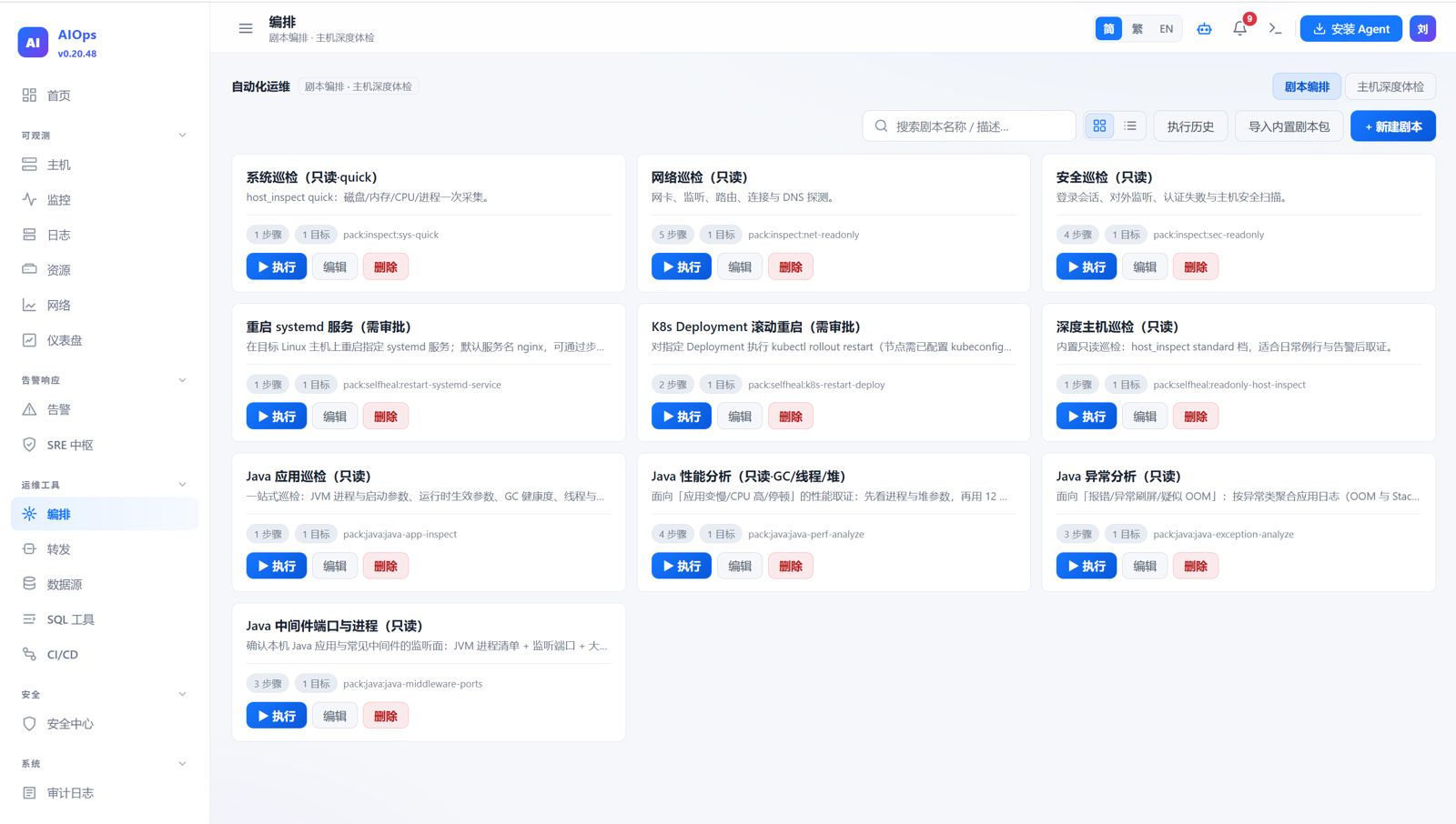
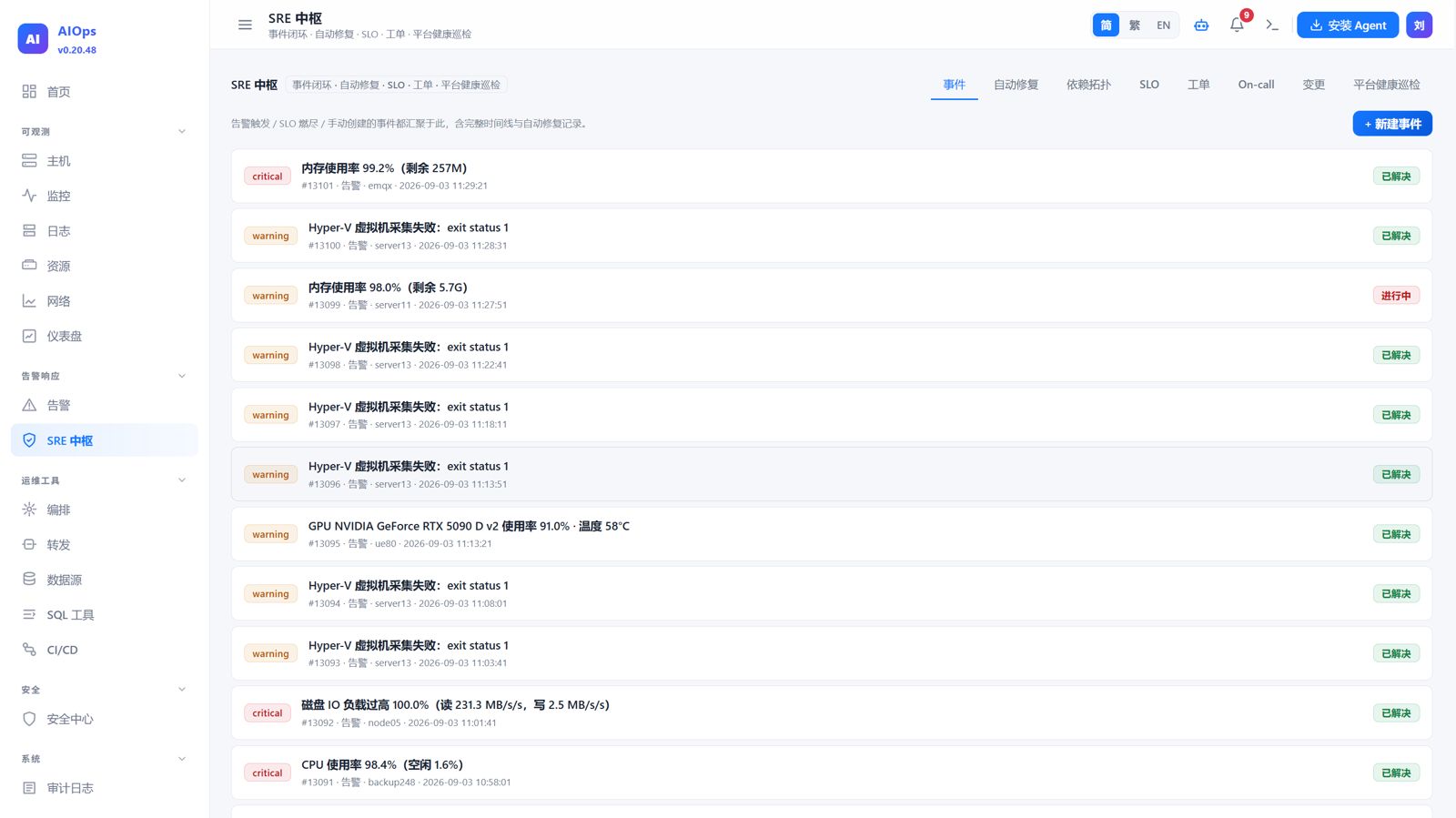
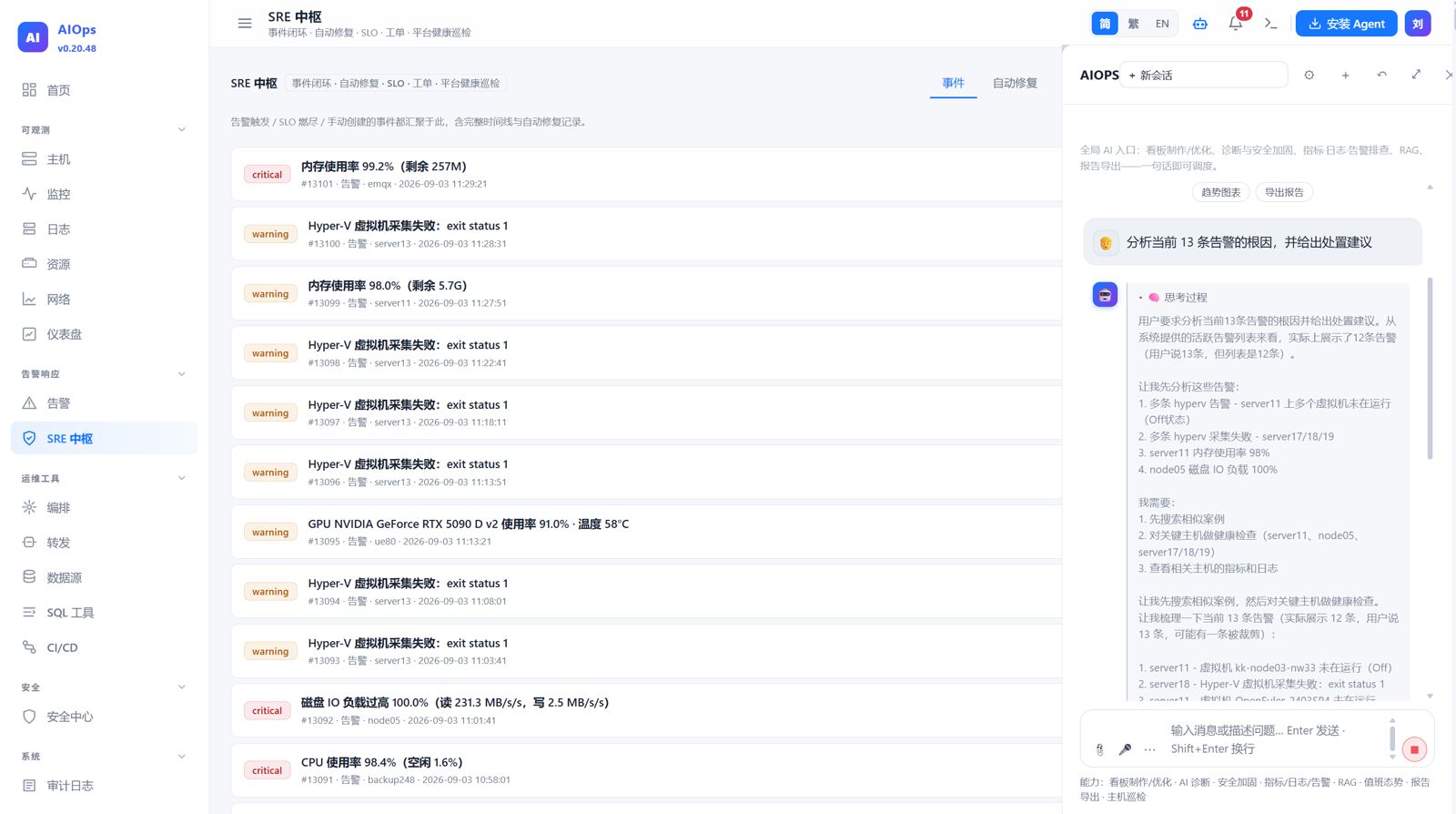
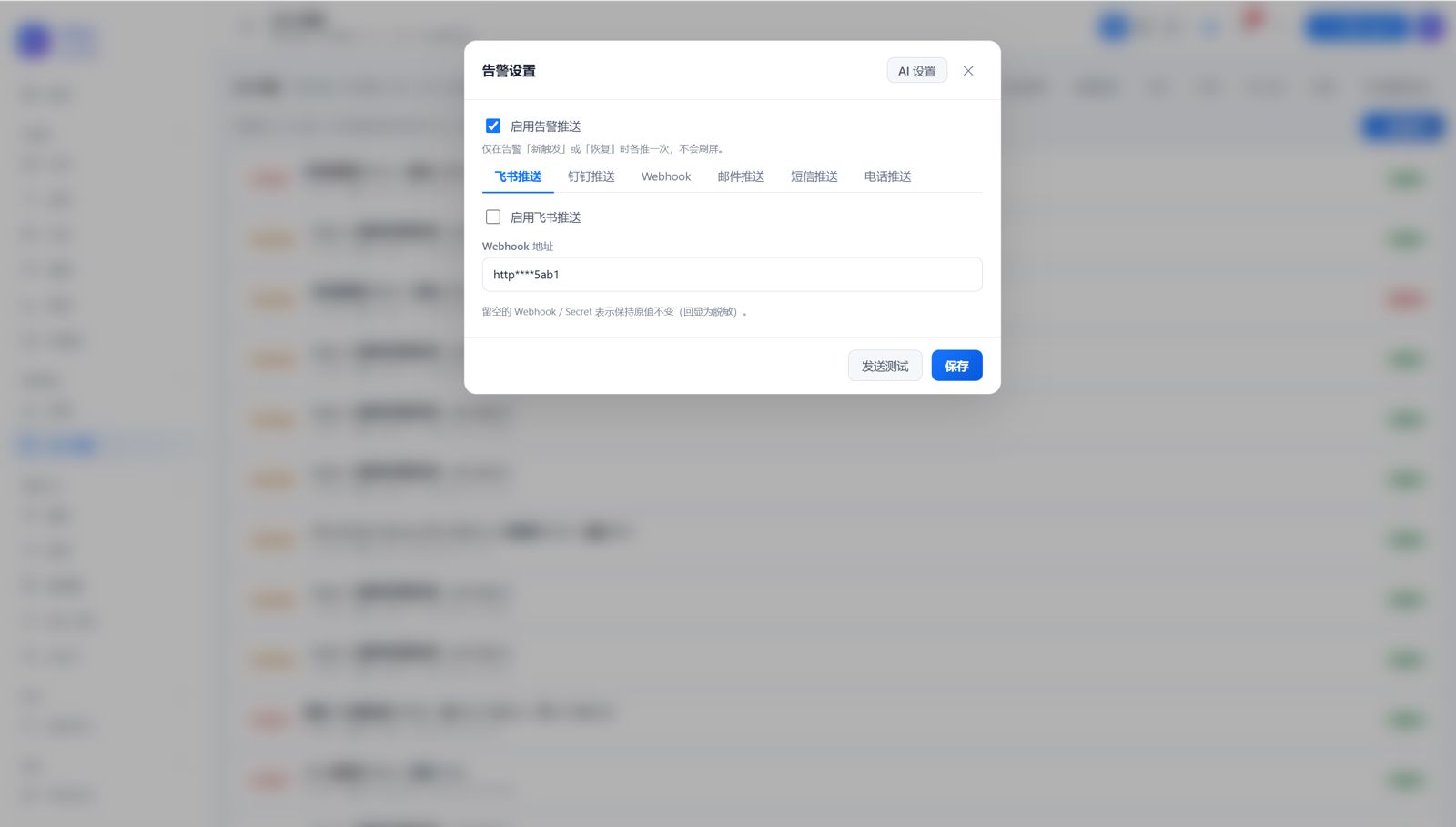
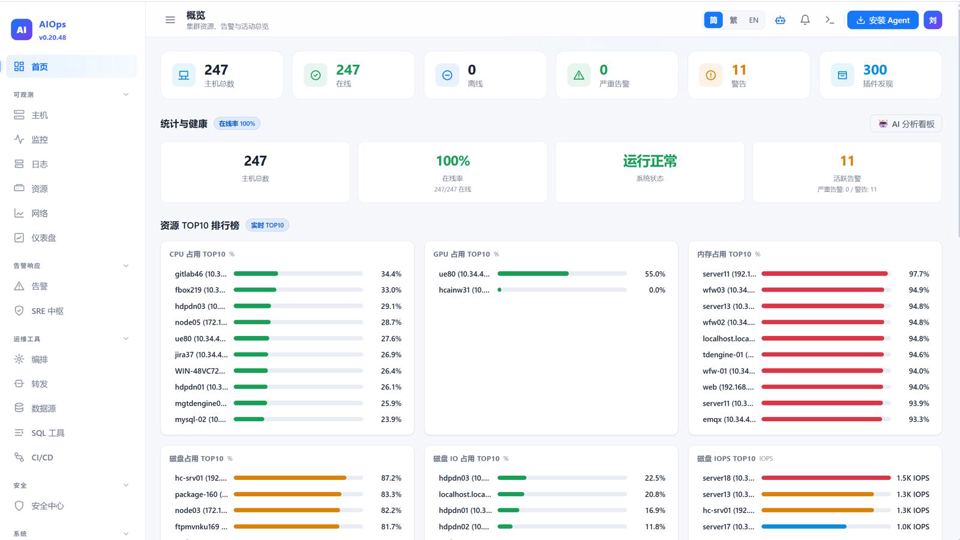
Compared with a typical assembled stack
| Typical assembled stack | openaiops | |
|---|---|---|
| Components | Monitoring, dashboards, alerting, bastion host and playbook system deployed separately | One Go server plus one dependency-free agent |
| Go-live | Integrating many components, often takes days | docker compose up -d, about 3 minutes |
| Data | SaaS, or spread over several databases | PostgreSQL + VictoriaMetrics, yours forever |
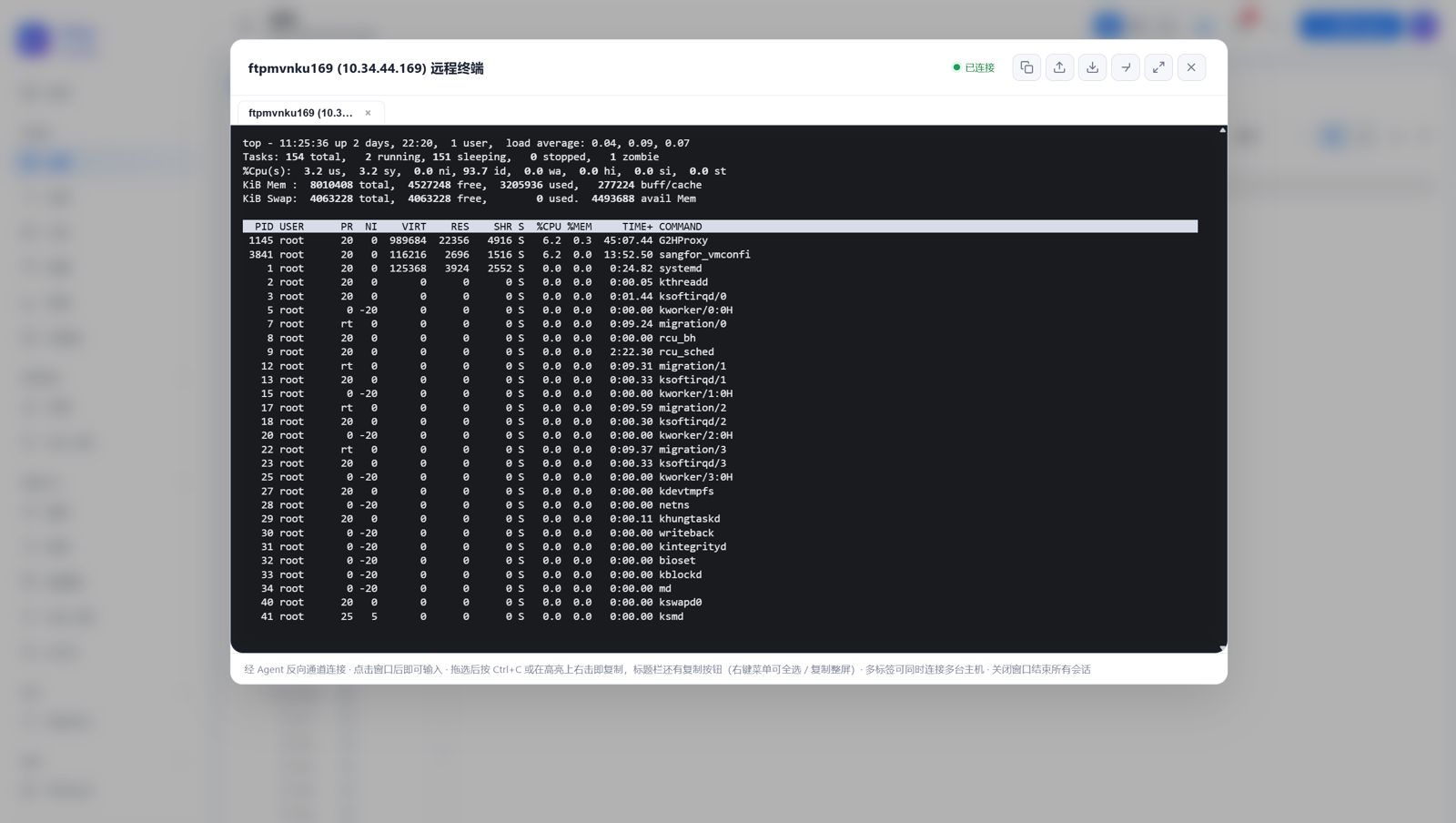
| Remote access | Buy a bastion host or VPN | Web terminal, desktop and port forwarding over the agent's reverse connection, no inbound ports |
| Fleet | Replace binaries host by host over SSH | Agent OTA (checksums, maintenance windows, batch rollout, rollback on failure) |
| Closed loop | People glue the tools together | Alert → playbook / self-healing → incident / SLO / ticket → AI analysis |
| License | Charged per node and per module | AGPL-3.0, no host limit |
Use cases
On-premises and hybrid cloud
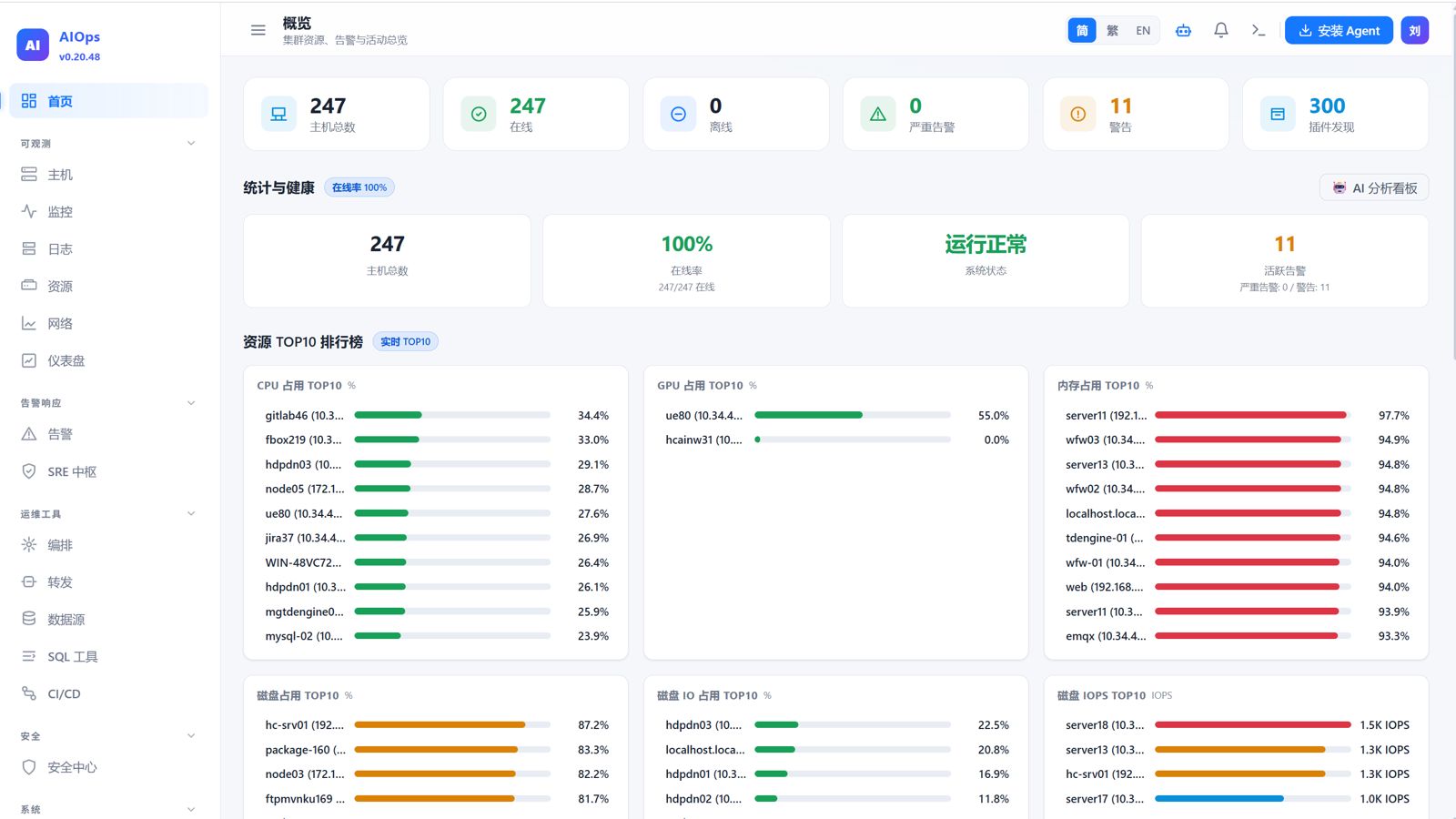
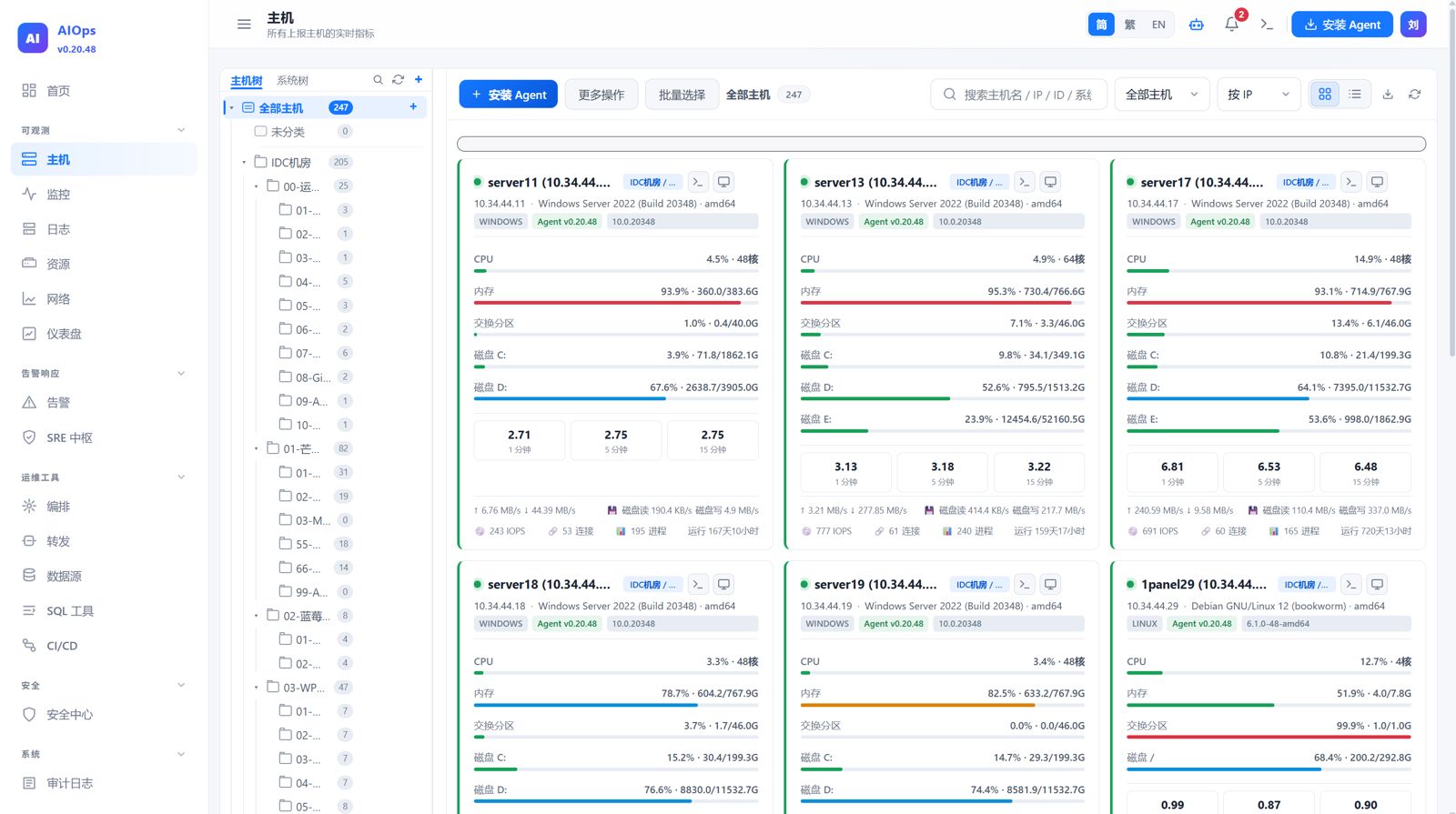
Physical servers, VMs, containers and cloud hosts in one place, grouped by site or business in the asset tree, so bottlenecks are easy to find
Domestic-stack environments
The agent supports Kylin and other domestic operating systems and deploys as a single binary, for organizations that must keep their data under their own control
Remote operations on private networks
The agent connects outward; metrics, the remote terminal and OTA share one reverse connection, so no SSH / RDP ports need to be opened per host
SRE loop from alert to self-healing
Alerts trigger playbooks and auto-remediation; incidents, SLOs, tickets and on-call form one chain, and AI analysis helps find the root cause
Mobile
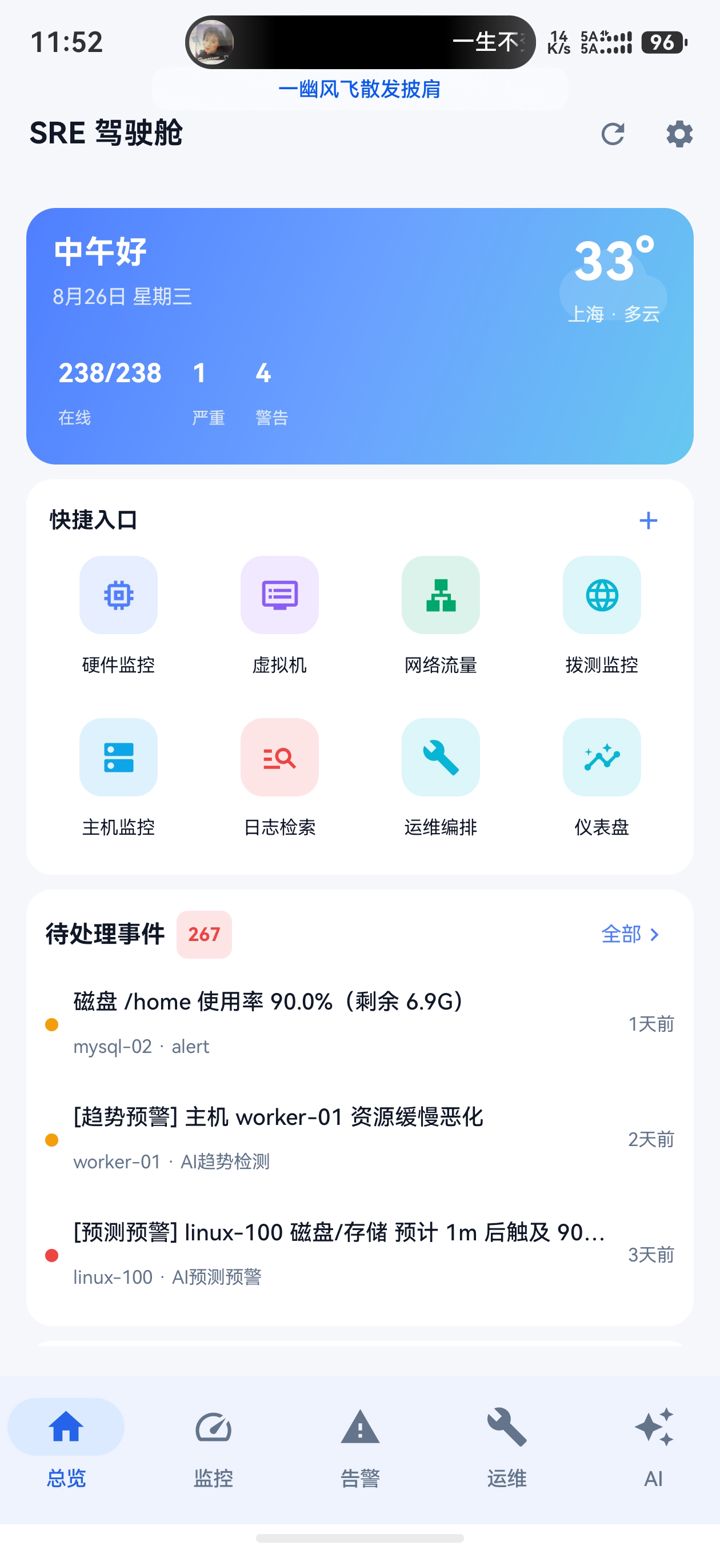
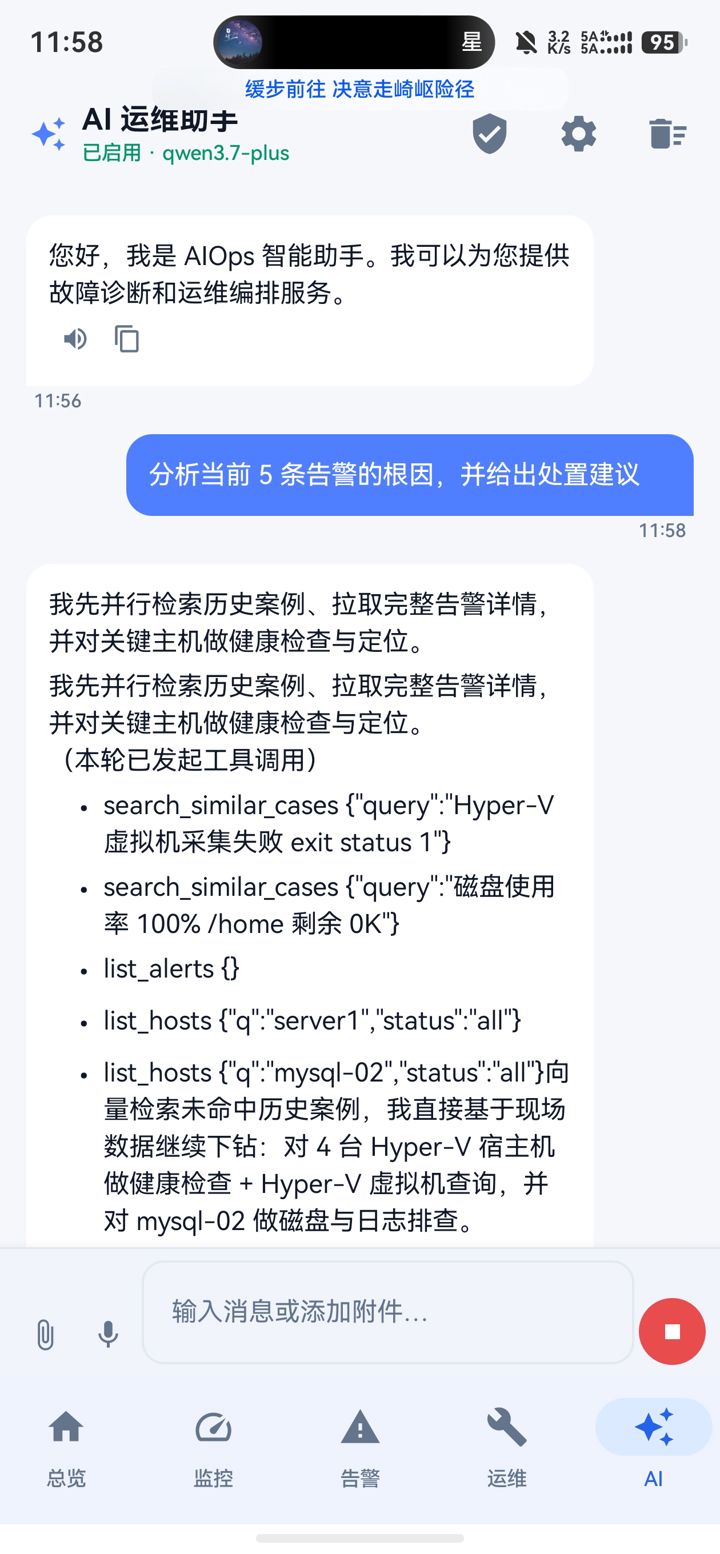
The Android / HarmonyOS app offers an SRE cockpit, infrastructure monitoring, a mobile remote terminal and an AI ops assistant. The mobile app is distributed separately and is not part of the open-source community edition; to use it, please contact us.
Deployment
The server needs PostgreSQL (pgvector) and VictoriaMetrics; the official docker compose file starts everything at once:
bash scripts/secure-compose.sh   # writes strong random secrets to .env
docker compose up -d             # server + VictoriaMetrics + PostgreSQL(pgvector)
# open http://SERVER_IP:8529, default account admin / admin; you must change the password at first sign-in
You can also deploy from binaries or build from source; see the project documentation for production hardening, backups and disaster recovery. After setup, generate the agent command on the "Install command" page and paste it on the target hosts.
Open-source license
openaiops is open source under AGPL-3.0, with no host limit and no features held back. The source is on GitHub with a mirror on Gitee. For a commercial license, the mobile app or vendor support, see pricing.


