

What it is
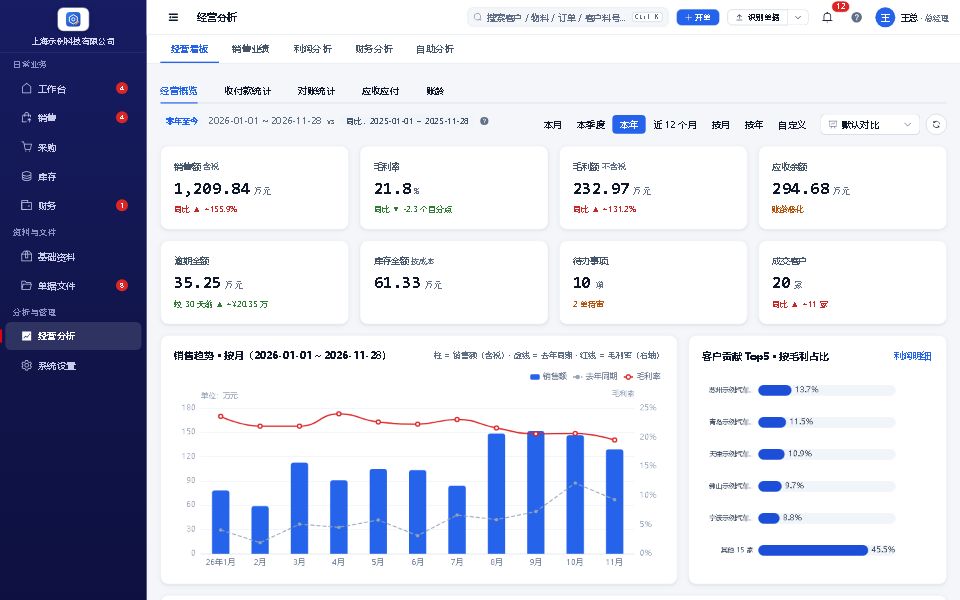
fordway is built for raw-material trading companies with 5 to 50 people. It covers the whole loop from customers, items and prices through sales, purchasing, stock movements, reconciliation and returns to business analytics, with built-in AI document recognition and a file center. It is not a cut-down generic inventory tool; it is designed around the problems trading companies hit every day:
- One item, many names: customers, suppliers and your own team each use their own names and codes, matched from memory or spreadsheets.
- Slow, error-prone order entry: customers order by chat message, spreadsheet or PDF, and staff retype every line.
- Messy prices, unclear margins: agreement prices, past prices and ad-hoc discounts get mixed up, and nobody stops low-price or over-credit orders.
- Accounts that never match: monthly statements, invoices before payment, partial payments and returns are checked in spreadsheets at month end.
- Scattered files: contracts, quotes and policies live on personal laptops and in chat history.
Screenshots
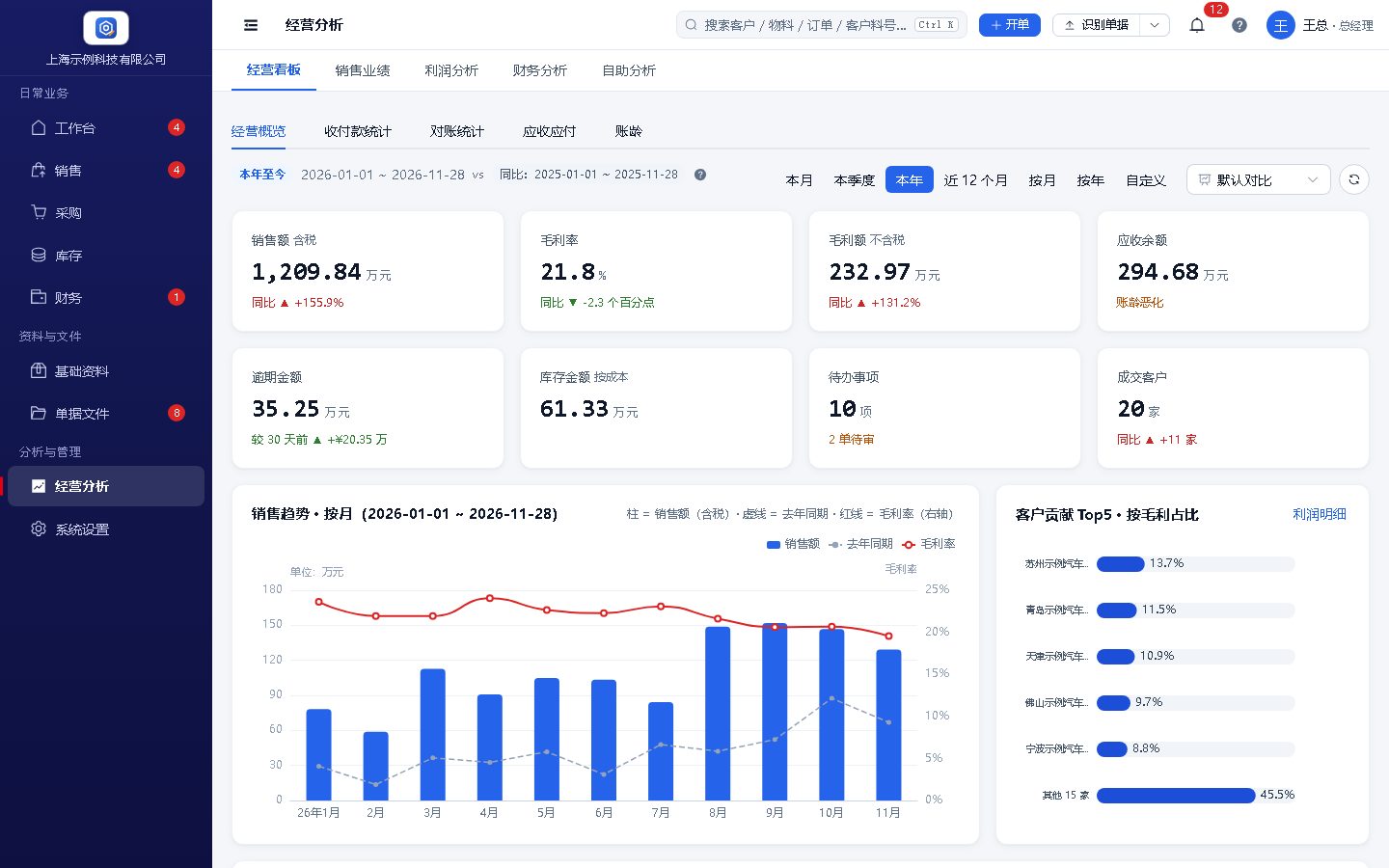
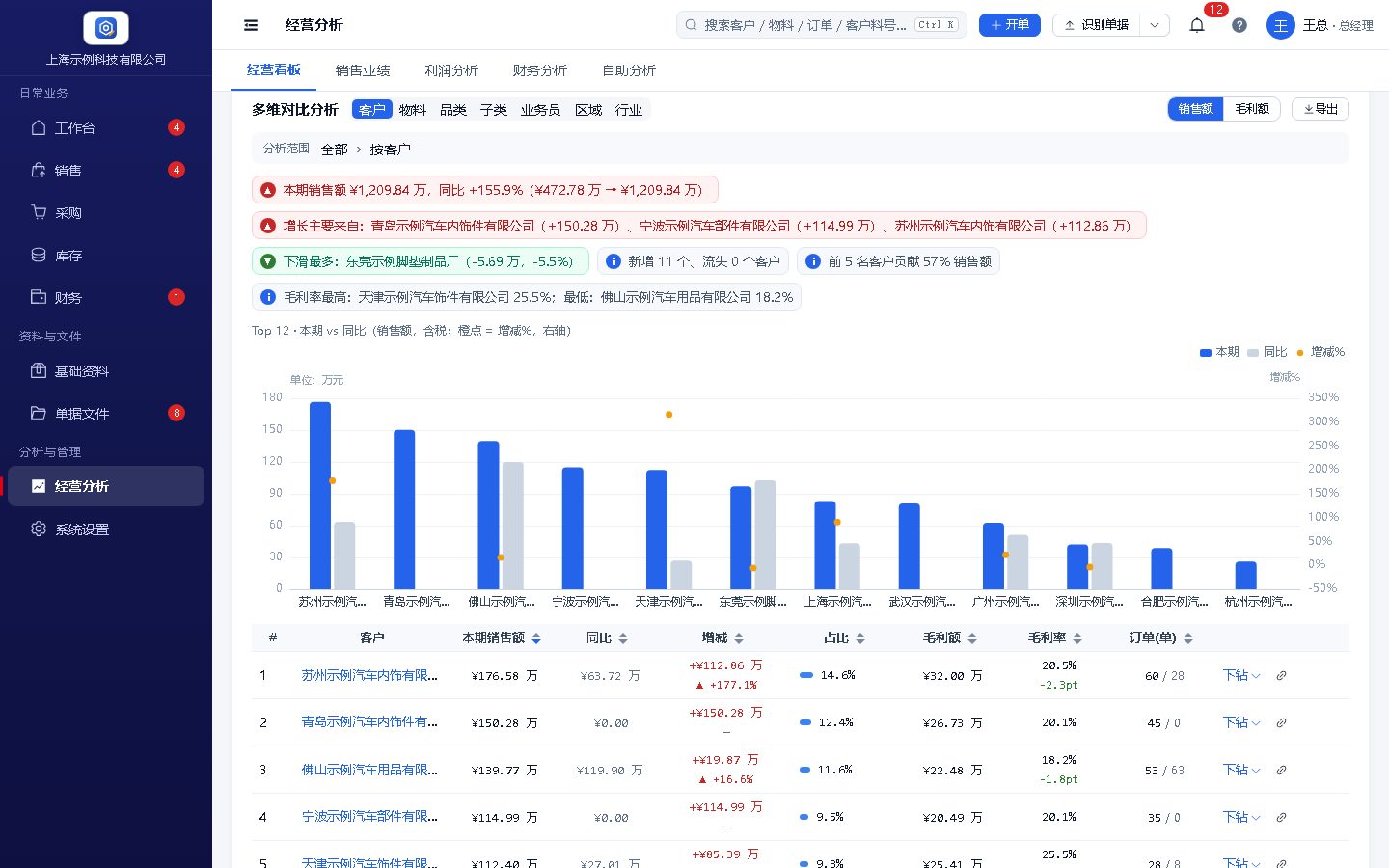
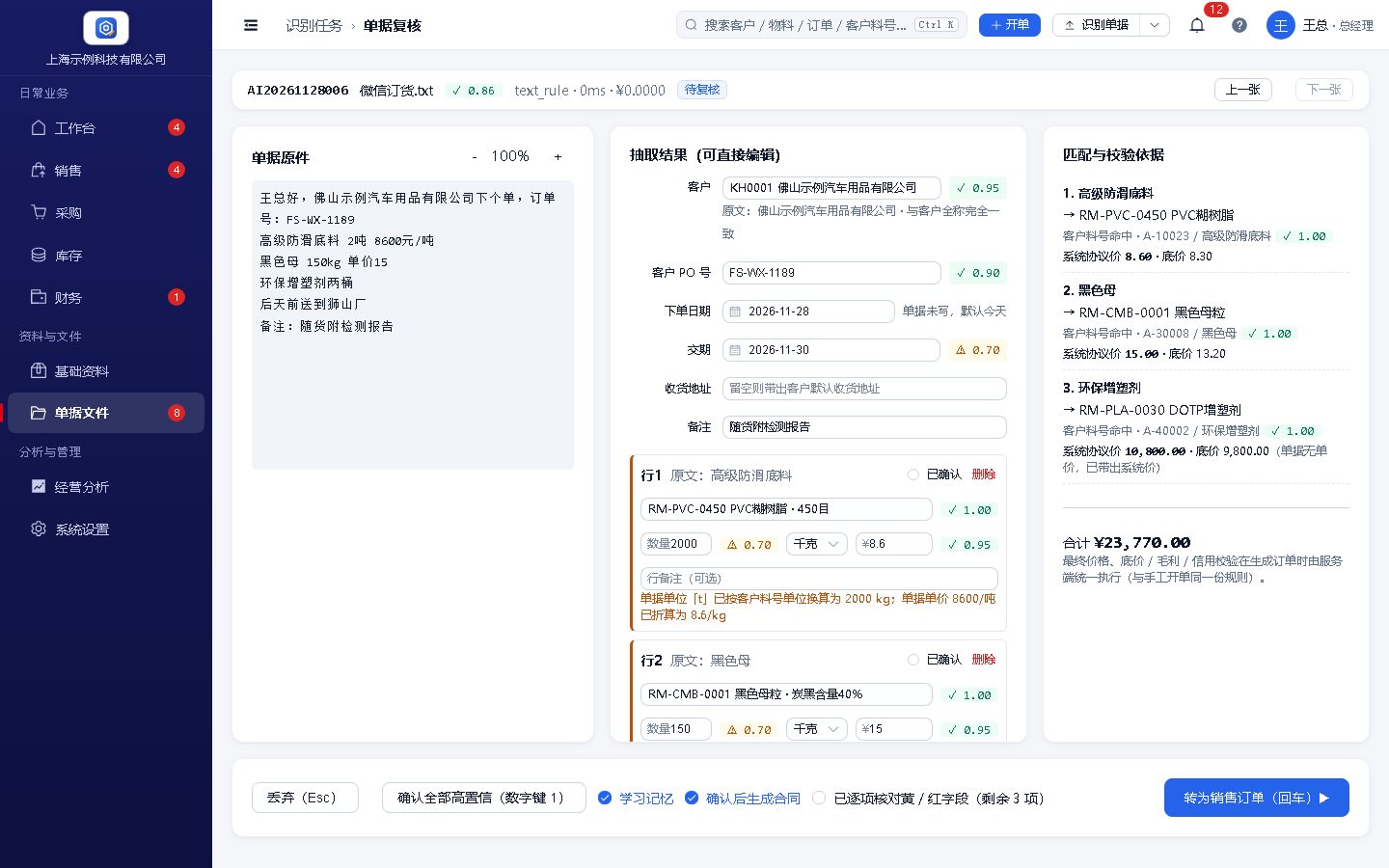
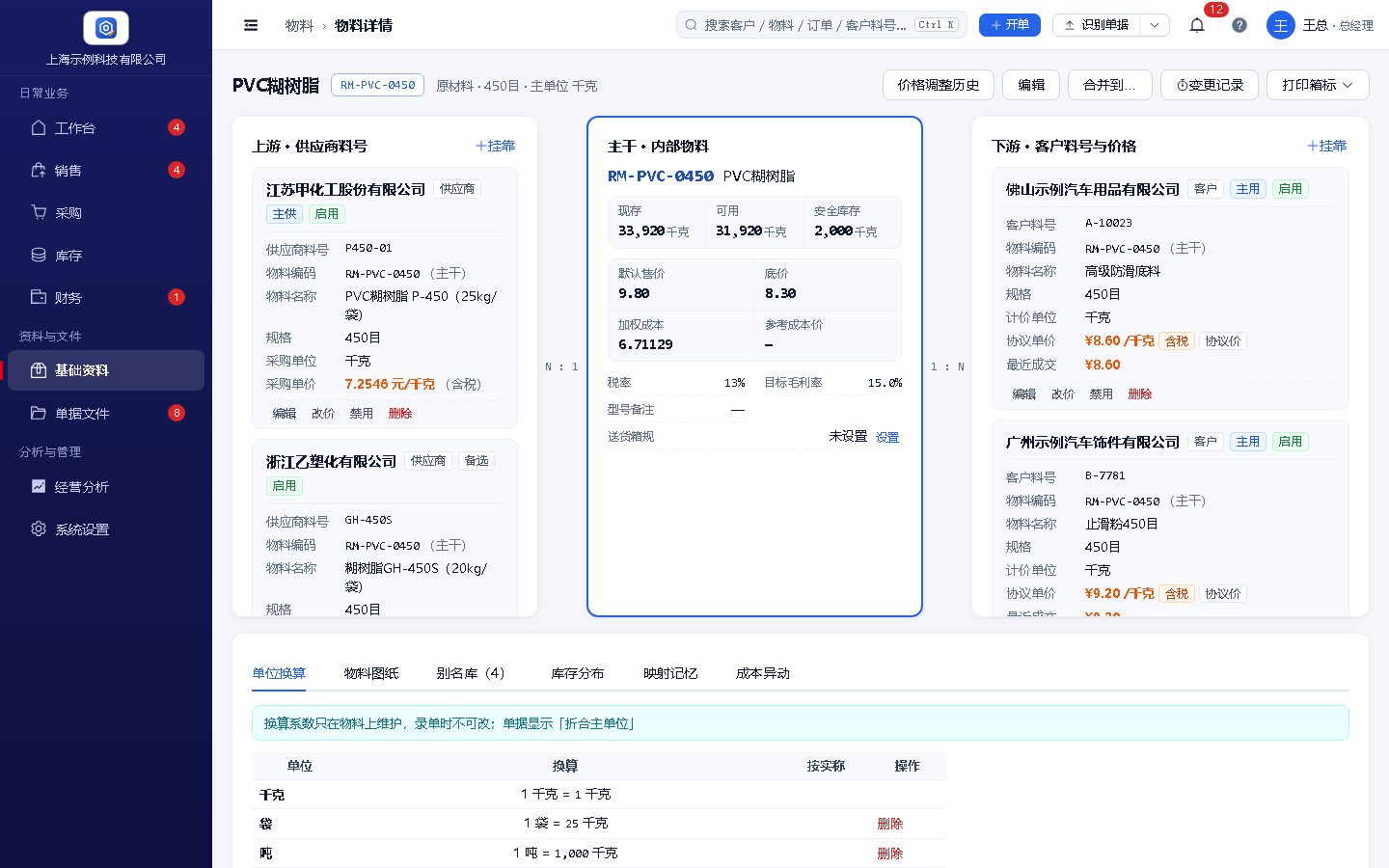
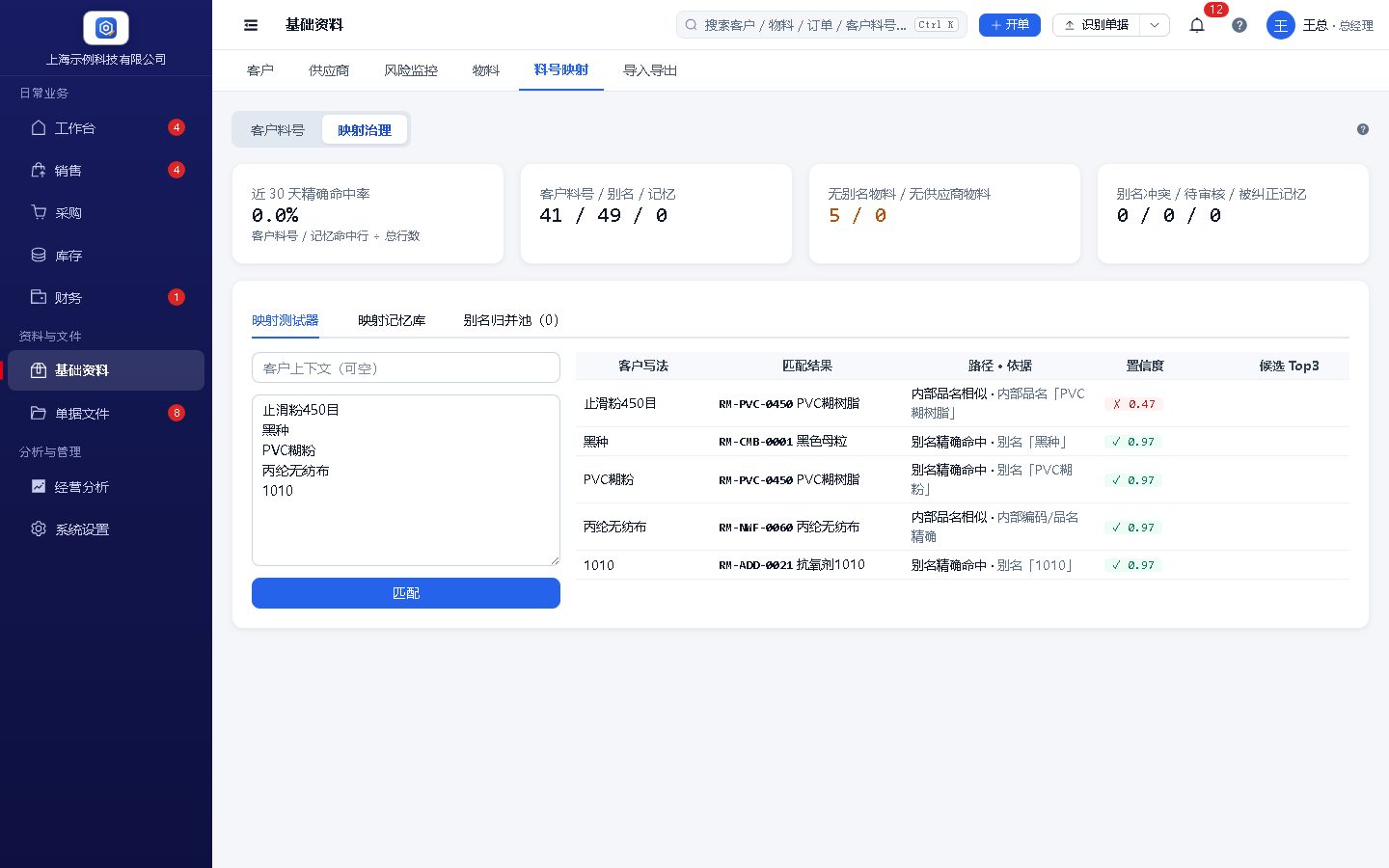
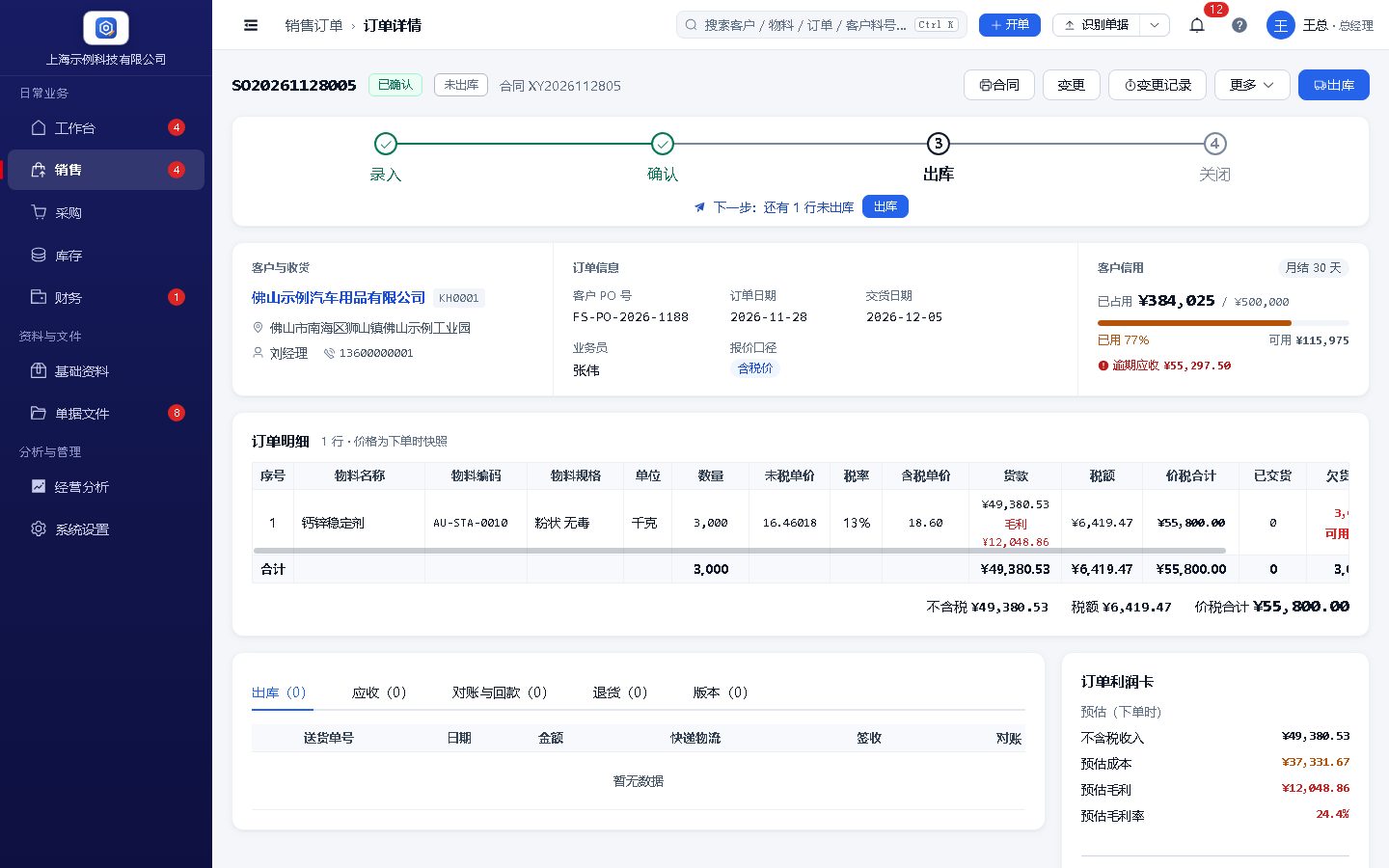
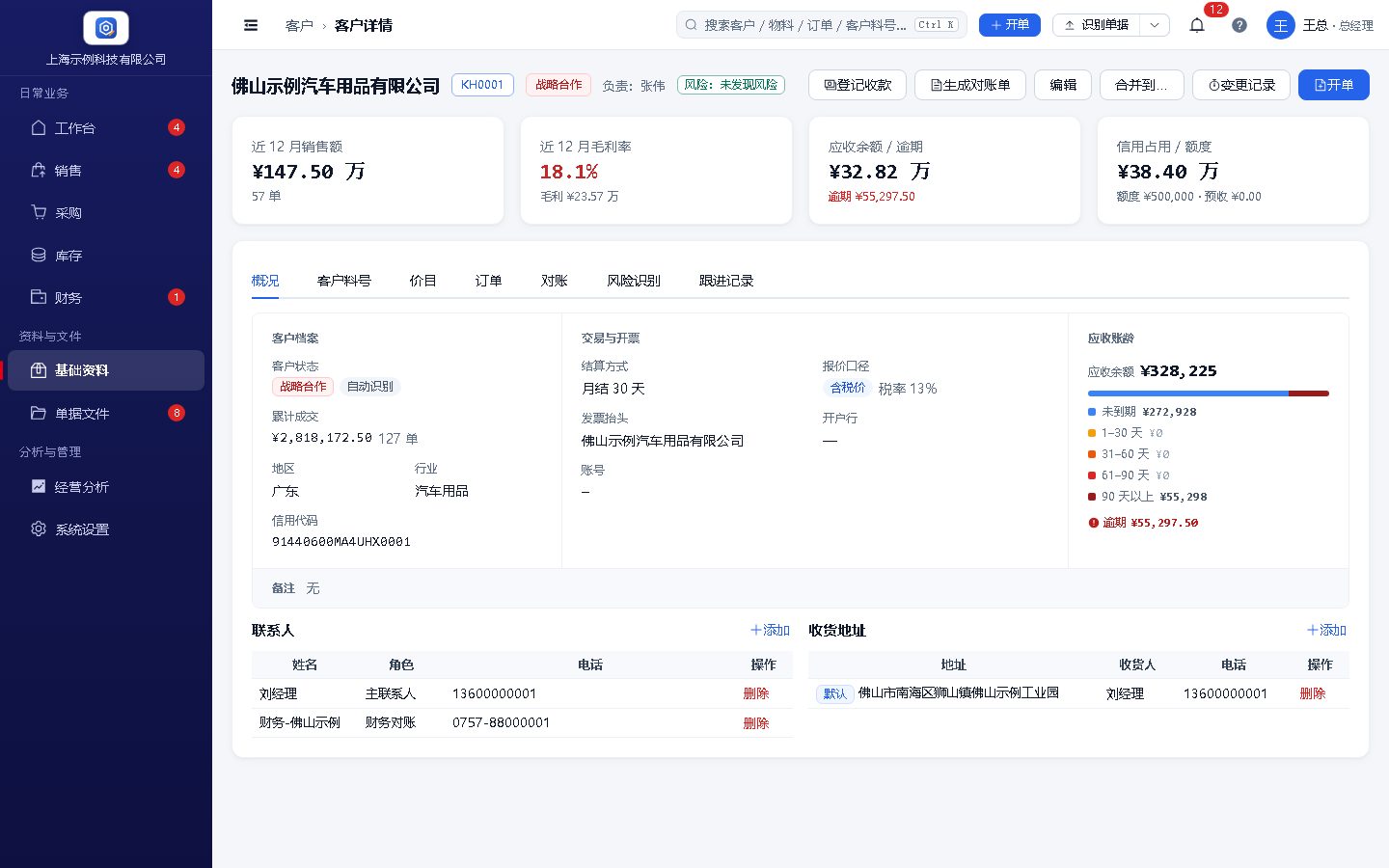
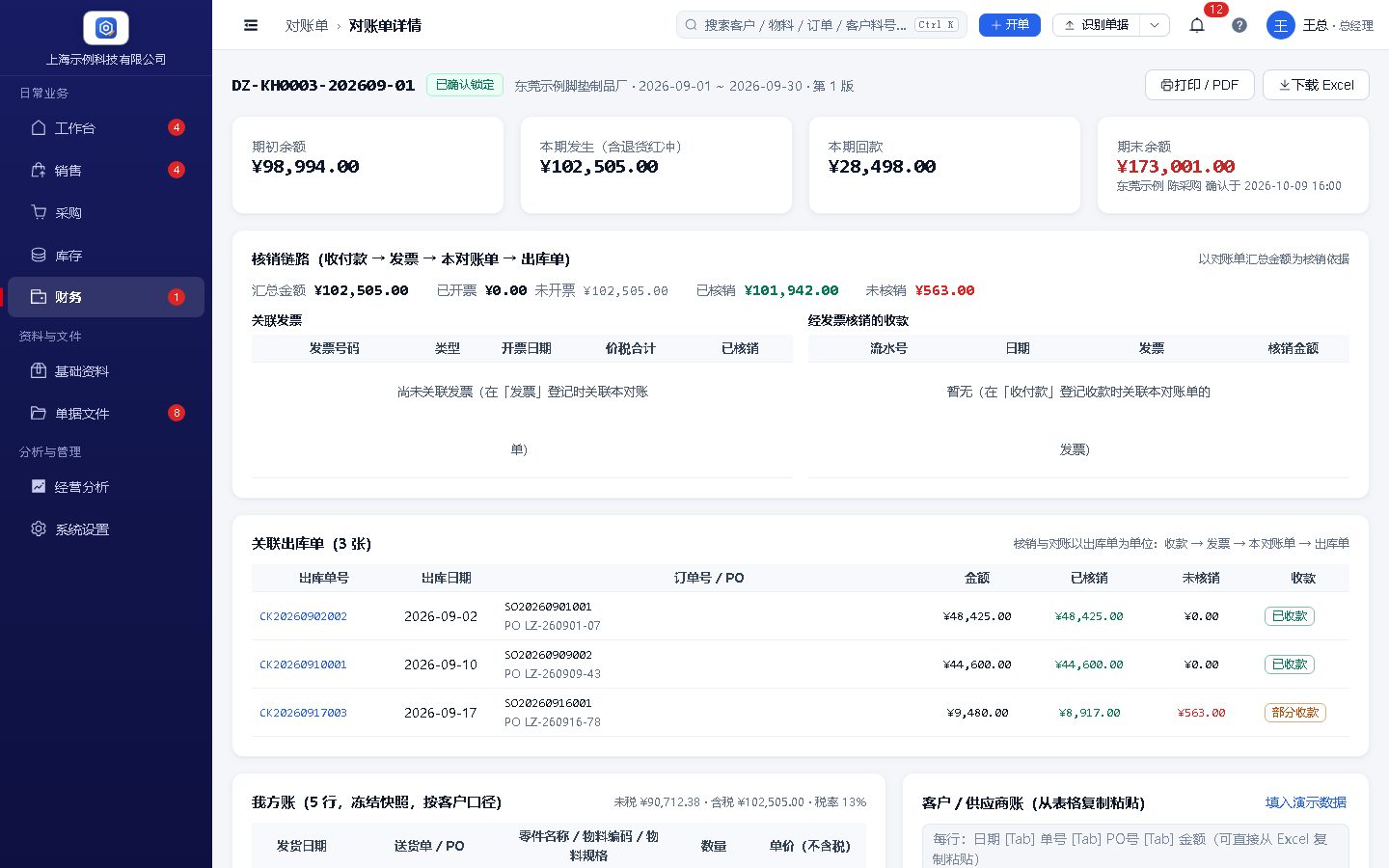
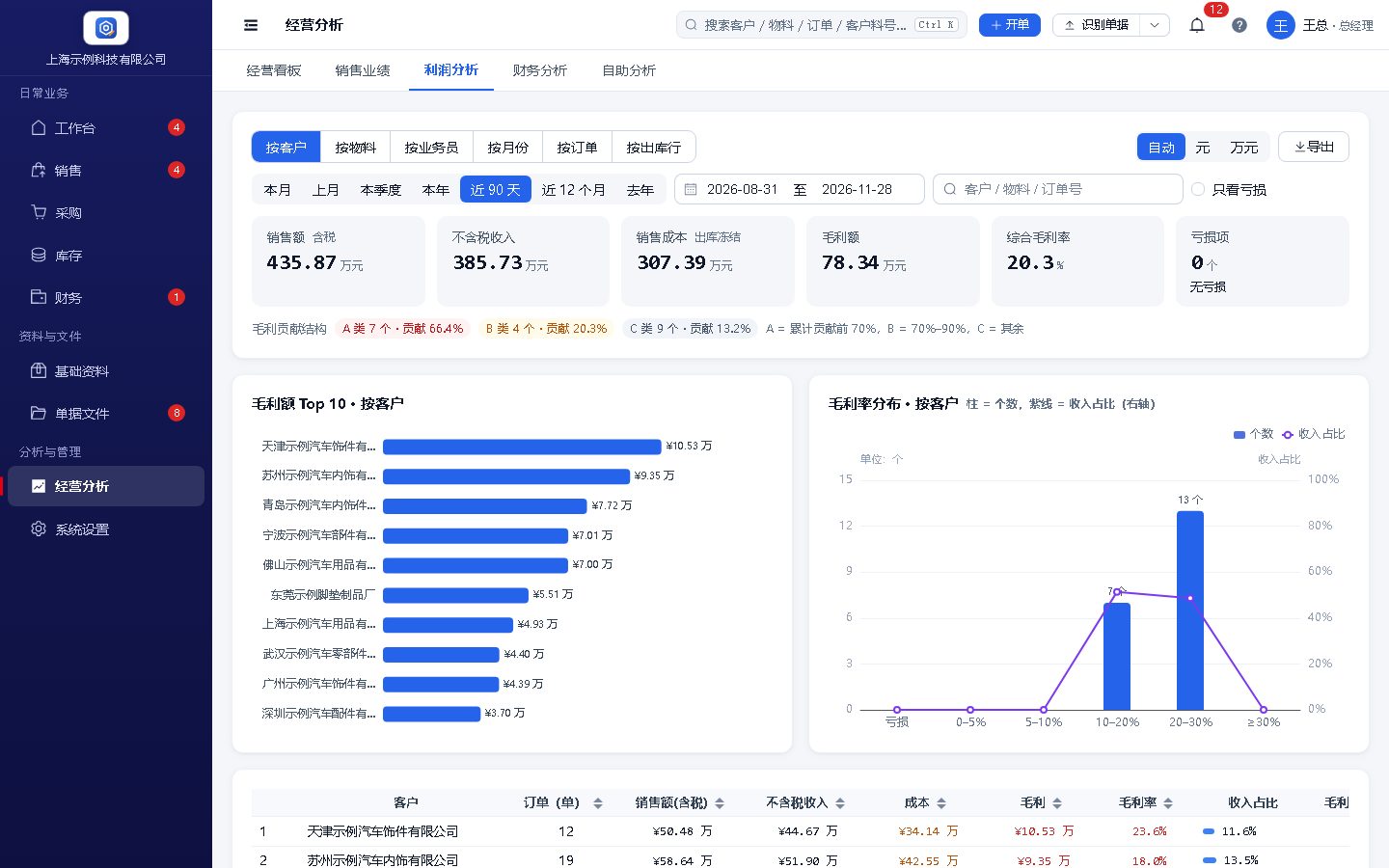
The screenshots come from a fordway demo environment; all companies, customers, suppliers and documents are fictitious demo data.
One document flows through the whole chain
Every document becomes the input of the next step, so nothing is typed twice:
- When a customer order is confirmed (entered by hand or recognized by AI), prices are fetched again and frozen as a snapshot;
- the system works out shortages from the order and suggests purchase requests and purchase orders;
- receipts record delivered, received, accepted and rejected quantities, and accepted goods can be shipped right away;
- every delivery creates a receivable, and an order closes itself once everything has shipped;
- payments are linked to invoices, invoices to statements, and the amount is settled down to each delivery;
- everything flows into the dashboard, and any difference shows up in the twelve consistency checks of the data quality page.
Every role sees only what it should
| Role | Can do | Cannot see |
|---|---|---|
| Owner | All business data, approvals, dashboard and profit analysis | Other people's personal files |
| Sales | Own customers and orders, order entry, own order margins | Other salespeople's customers, purchase prices, costs, supplier identities |
| Customer service | Order entry and AI review, deliveries, statements, payments, invoices | Purchase prices, cost amounts, profit |
| Purchasing / warehouse | Suppliers, purchasing, receipts, stock, stocktakes, supplier payments | Selling prices, sales, receivables, dashboard |
| Administrator | Users and permissions, configuration, integrations, audit and data quality | Other people's personal files |
The same rules apply to pages, APIs and exports: a field you may not see is never returned by the API, the column is hidden on the page and left out of exports, and database row-level security is the last line of defence.
Use cases
Raw material and auxiliary material trading
Many item types and customer-specific names; contracts, delivery notes, carton labels and statements print in each customer's own wording
B2B accounts reconciled monthly
Frozen, versioned statements, automatic comparison with the customer's ledger, and invoices and payments settled step by step instead of in spreadsheets
Owners who want clear margins
Profit uses the cost frozen at delivery, with drill-down by customer, item and salesperson, and low-price or over-credit orders go to approval
Field sales and mobile work
Mobile browser and WeChat Mini Program: look up customers, enter orders, approve, scan waybills and upload files with the same permissions as the web app
Deployment
The API, background jobs and web app ship as one program that needs only a PostgreSQL database; you can run it with Docker Compose (built from source or from prebuilt amd64 / arm64 images) or as a single binary. It runs on 2 cores and 2 GB at minimum; 2 cores, 4 GB and a 50 GB SSD are recommended for teams of up to 10. The demo environment comes with 24 months of day-by-day simulated business data, so year-over-year analysis can be shown right away. External services such as vision models and parcel tracking are optional; without them the system falls back to rule-based recognition and manual entry.
Licensing
fordway is a commercially licensed product that supports self-hosting and offline licensing. For a demo environment, a deployment assessment or a quote, book a demo or contact us.


