
Tag: WPECS
All articles about “WPECS”
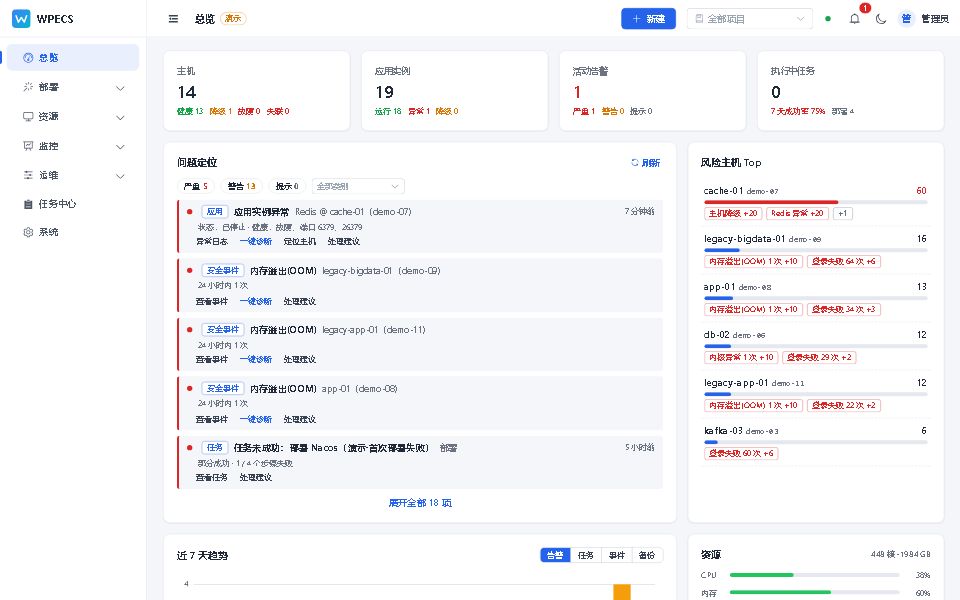
Introducing WPECS: one binary to manage the full application lifecycle on Linux hosts
WPECS turns private delivery into a web wizard: enter IPs, pick a solution, confirm the plan, and the platform pre-checks, installs in parallel, initializes clusters and verifies integration; monitoring, diagnosis, upgrades, scaling, inspections and backups stay in the same platform, with no agent on target hosts.
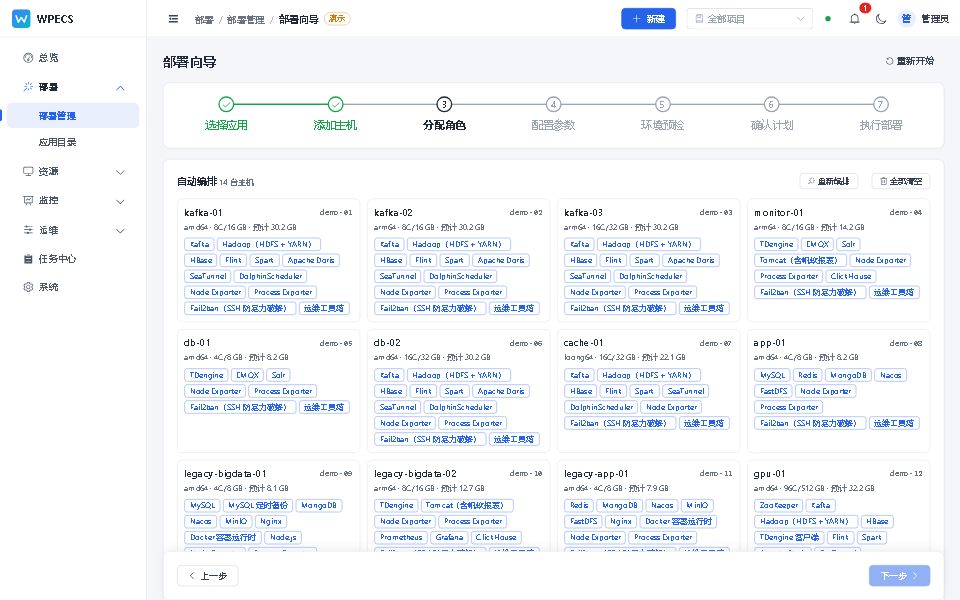
Behind the seven-step wizard: WPECS's full-stack orchestration, DAG execution and failure classification
WPECS's planner normalizes the solution, assigns roles, validates constraints and compiles a DAG; the execution engine runs it in topological order in parallel with per-host locks, and supports pause, cancel, retry and resume. Every component ships its own verify.sh, the deployment ends with integration checks, and a failure only affects the components that depend on it.
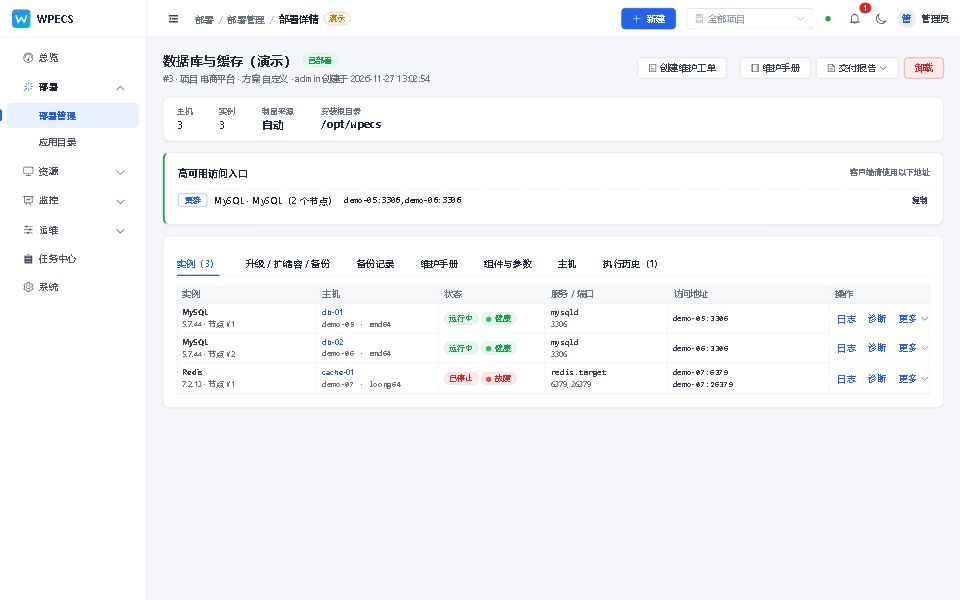
HA by default and per-machine tuning: how WPECS turns delivery know-how into platform behaviour
WPECS builds a high-availability layout into every component (VIPs, dual primary, Sentinel, standby masters, Raft, erasure coding and more) and calculates key parameters from each machine's CPU, memory and disk type: subtract the system reserve, share the rest by the weights of co-located components, and pick kernel settings by load.
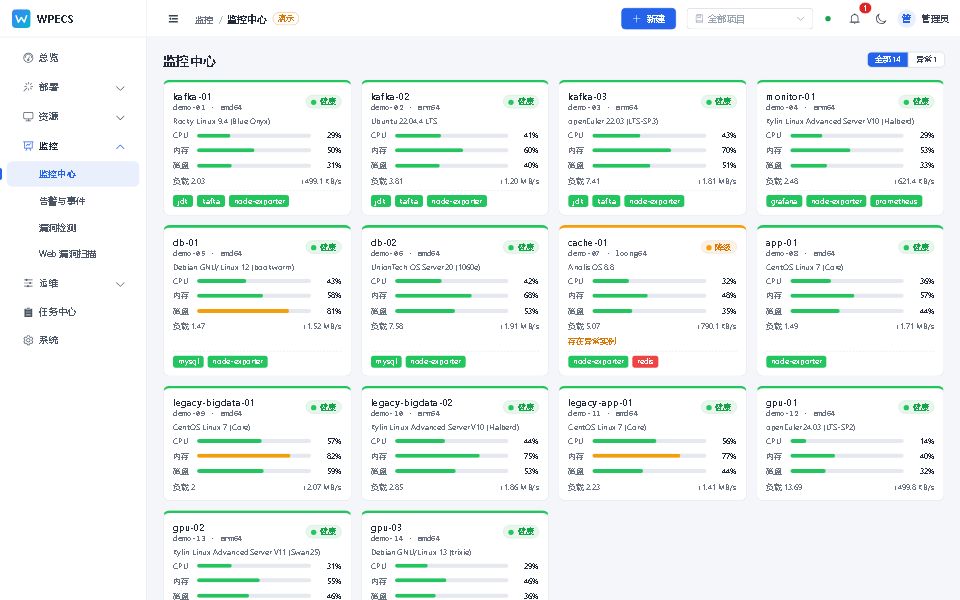
Legacy adoption: read-only discovery, version detection and never changing the host
Projects delivered with old scripts do not need a reinstall: WPECS imports the existing config.ini, probes processes, ports, systemd and containers read-only over SSH, identifies the real versions of 30+ kinds of components, and brings them under monitoring and operations once confirmed, running at low priority without making any changes.
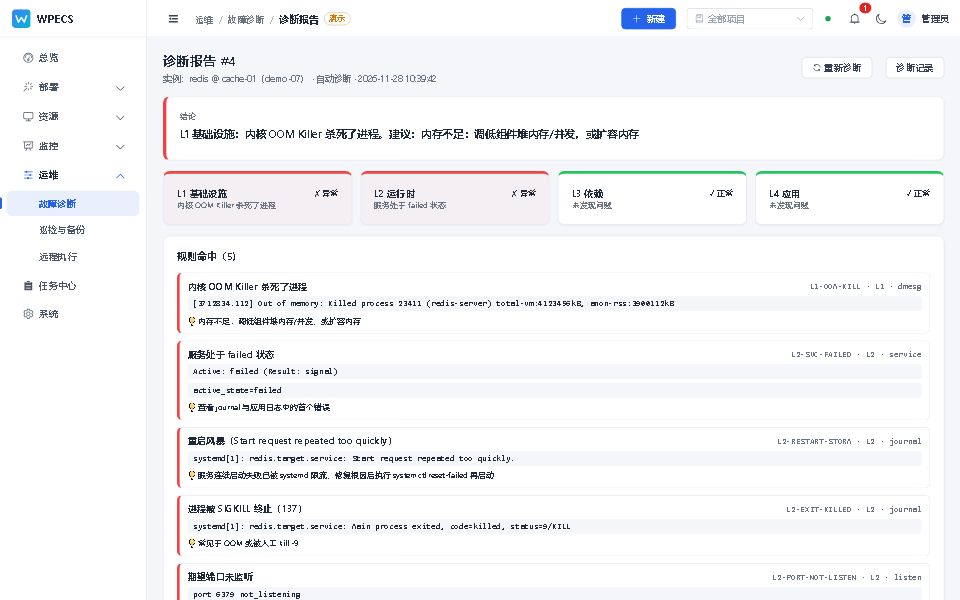
From alert to answer: WPECS's 43 layered diagnosis rules
WPECS splits diagnosis into four layers (host, runtime, dependencies, application) and gathers evidence layer by layer with 43 rules; when an alert fires, a read-only diagnosis runs automatically and its conclusion and advice go out with the alert, optionally analyzed by Claude or an internal LLM with the evidence redacted.
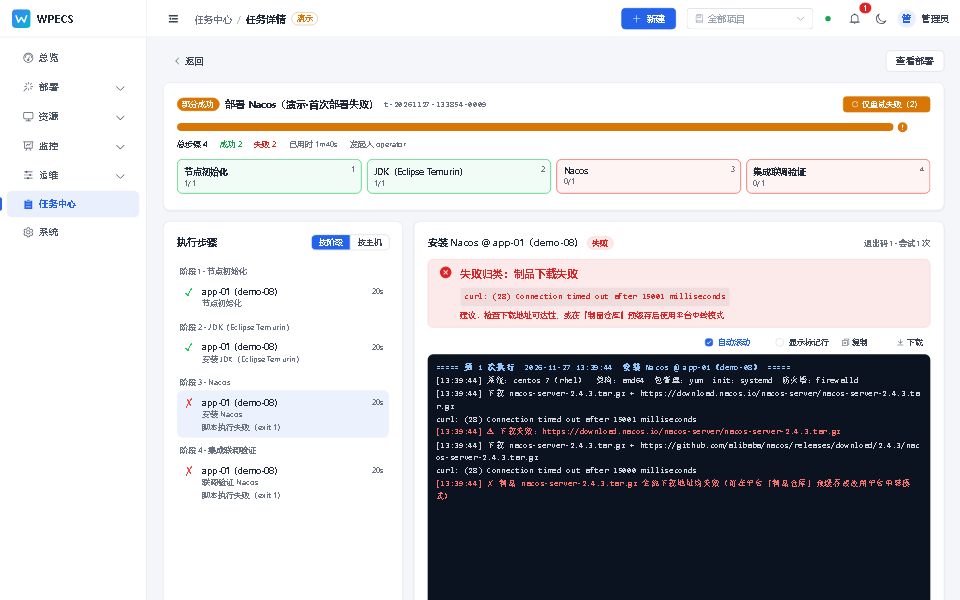
Delivering into offline networks: WPECS's artifact repository, download engine and vulnerability management
WPECS downloads each package once into its repository and pushes it to nodes; its download engine probes many sources at once, detects soft 404s, downloads in segments across mirrors and checks upstream checksums. Fully offline sites get per-architecture export bundles imported with one command, and the vulnerability database can be imported offline too.